
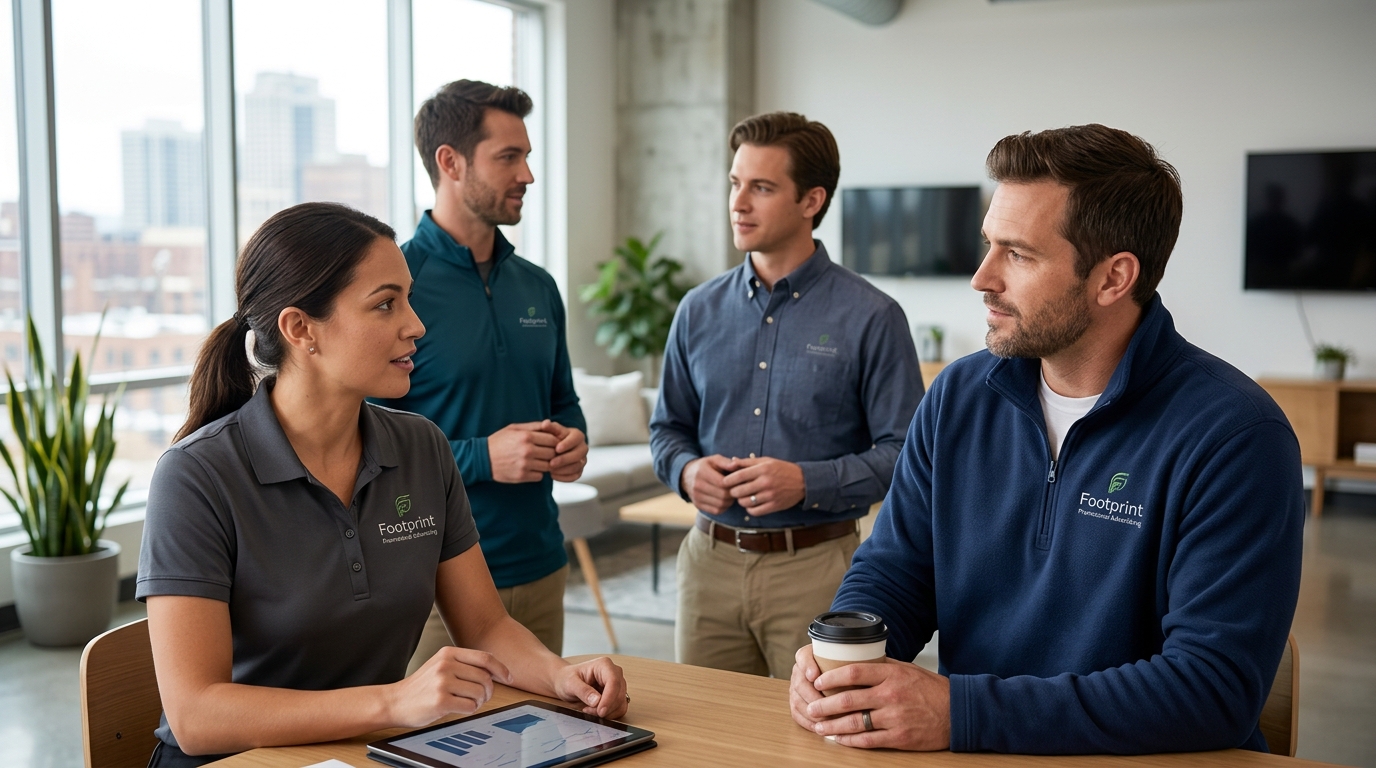
Corporate branding is no longer limited to logos on business cards. According to recent industry data, the global promotional products market has consistently grown, reaching billions in revenue as companies realize that branded apparel serves as a mobile billboard. When employees wear branded gear, brand visibility increases by an average of 30 percent in daily operations. This guide explores how US businesses source high-quality uniforms and promotional apparel, focusing on the operational advantages of working with specialized distributors like Footprint Promotional Advertising.
The Role of Promotional Apparel in Modern Branding
Branded apparel functions as a critical touchpoint between a company and its audience. Unlike digital ads, which are often ignored, physical garments create a tangible connection. Promotional marketing experts note that recipients are significantly more likely to keep and wear items that offer utility, such as workwear or high-quality hoodies.
For service-based industries, uniforms provide a dual purpose: professional identity and safety compliance. In the US, the demand for promotional apparel decoration has shifted toward bulk orders that require consistent branding across diverse garment types. Companies no longer rely on single-source retail purchases. Instead, they partner with national distributors who offer centralized billing, bulk discounts, and specialized decoration techniques like embroidery and screen printing.
How to Choose the Right Apparel Provider
Selecting a vendor for branded company apparel requires evaluating several operational factors. The primary consideration is the breadth of the product catalog. A robust provider must offer everything from basic t-shirts to specialized executive wear. Footprint Promotional Advertising exemplifies this by maintaining a vast inventory that spans multiple brands and styles.
Secondly, the decoration capabilities are paramount. Not all vendors offer the same range of customization methods. High-volume orders often benefit from screen printing, while smaller, detailed runs may require direct-to-garment printing or embroidery. The ability to handle complex artwork uploads and provide digital proofs is essential for maintaining brand consistency.
Finally, logistical efficiency determines the success of the deployment. A reliable provider must offer transparent tracking, reliable shipping timelines, and responsive customer support. The contact infrastructure of a vendor should allow for direct communication with specialists who understand the nuances of corporate gifting and uniform distribution.
Core Categories: Uniforms vs. Promotional Gear
Understanding the distinction between corporate uniforms and promotional products is vital for budget allocation. Uniforms are typically functional, durable, and designed for daily wear in professional or industrial settings. Promotional gear is often lighter, trendier, and intended for events, client appreciation, or internal morale boosting.
Here is a breakdown of the primary categories utilized by US businesses:
| Category | Primary Use Case | Key Features | Popular Brands |
|---|---|---|---|
| Workwear | Daily operational use | Durability, pockets, stain resistance | Dickies, Carhartt, Port & Company |
| Polo Shirts | Corporate identity | Professional look, moisture-wicking | Bella + Canvas, Nike, Adidas |
| Outerwear | Seasonal branding | Insulation, weather resistance | The North Face, Columbia, Eddie Bauer |
| Headwear | Event visibility | Adjustable fit, structured panels | New Era, Richardson Caps, Cap America |
Workwear, such as Dickies uniforms, is engineered for longevity. These garments often feature reinforced stitching and high-quality fabrics that withstand industrial washing. In contrast, promotional polos from brands like Bella + Canvas focus on fit and comfort, appealing to younger demographics in tech or creative sectors.
Top Brands Used by US Distributors
A credible apparel provider must partner with established manufacturers to ensure quality. The US market is dominated by brands that offer consistent sizing and reliable supply chains. Footprint Promotional Advertising curates its inventory from top-tier manufacturers to meet diverse corporate needs.
Adidas and Nike are leaders in performance-based apparel. Their branded gear is often selected for sales teams or athletic departments due to its moisture-wicking technology and modern aesthetic. The North Face and Columbia dominate the outerwear sector, providing essential branding opportunities for winter campaigns or outdoor-focused companies.
For more traditional corporate environments, Brooks Brothers and Oakley offer executive-level branding. These brands command higher price points but deliver superior craftsmanship and prestige. Yeti drinkware and OtterBox tech accessories are also frequently bundled with apparel to create comprehensive corporate gift packages. The diverse brand portfolio ensures that every company can find a match for its specific culture and budget.
The Customization Workflow
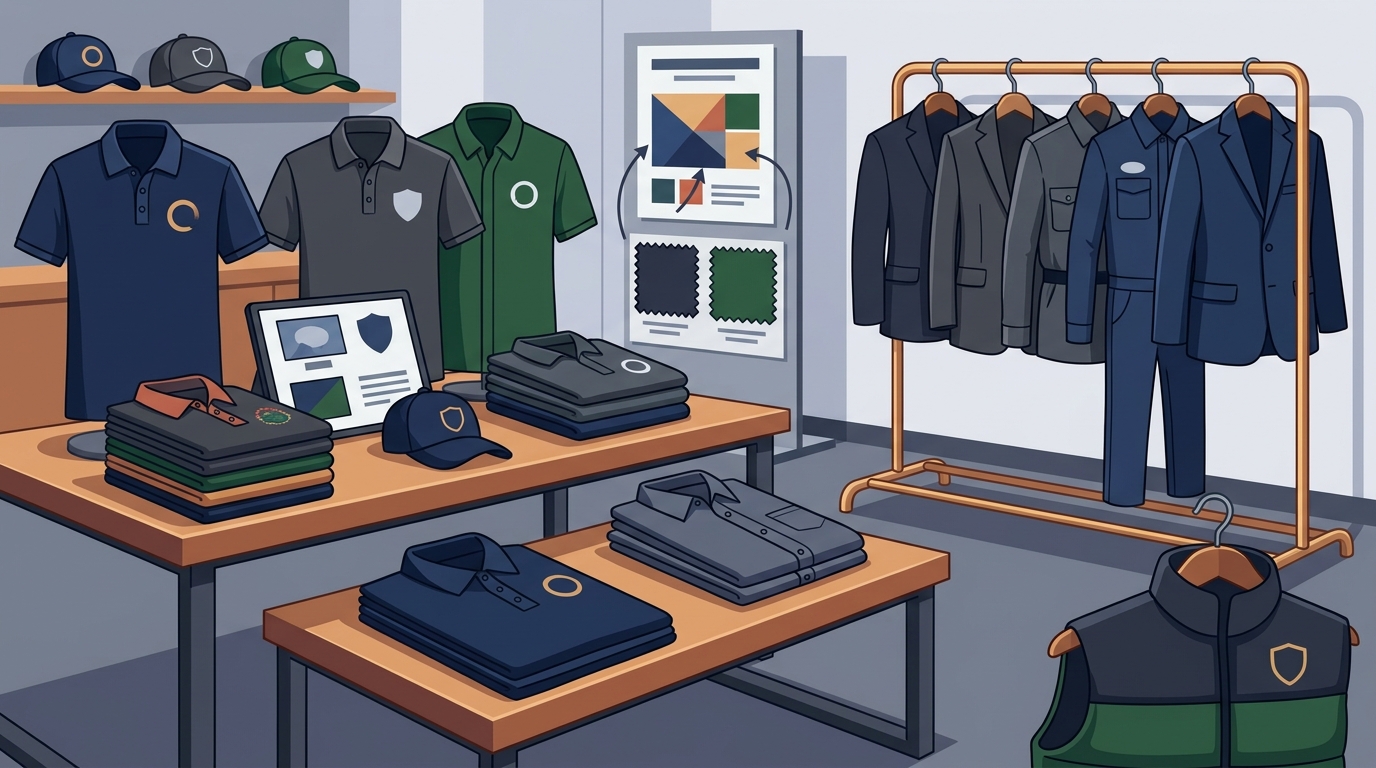
The journey from concept to delivery involves several critical steps. First, the client selects the garment style and quantity. This is followed by artwork preparation. Art upload tools allow designers to submit vector files or high-resolution images for review.
Next, the provider creates a digital proof. This step is crucial for verifying logo placement, color accuracy, and font integrity. Once the proof is approved, the decoration process begins. Embroidery is preferred for polos and hats due to its durability and professional appearance. Screen printing is cost-effective for large runs of t-shirts and sweatshirts.
Finally, quality control and shipping ensure that every item meets the client's standards. Quick guides and detailed service descriptions help clients understand the timeline and cost implications of each decoration method. This transparency builds trust and prevents costly errors.
Key Takeaways
- Brand Visibility: Branded apparel increases daily brand exposure by up to 30 percent in active work environments.
- Vendor Selection: Prioritize providers with extensive brand catalogs, robust decoration capabilities, and transparent support.
- Product Diversity: Successful companies utilize a mix of workwear, polos, and outerwear to cover all branding needs.
- Brand Partnerships: Top distributors partner with industry leaders like Nike, Adidas, The North Face, and Dickies.
- Workflow Efficiency: Digital art uploads and proofing processes streamline the customization journey.
- Cost Management: Bulk ordering through specialized distributors offers significant savings over retail purchases.
- Quality Assurance: Consistent sizing and durable fabrics are non-negotiable for long-term brand representation.
Frequently Asked Questions
What is the difference between embroidered and printed logos?
Embroidery involves stitching thread into the fabric, creating a textured, durable finish ideal for polos and hats. Printing applies ink to the surface, offering vibrant colors and detailed graphics for t-shirts and hoodies. Service details often clarify which method suits specific garment types.
How many units are required for bulk pricing?
Bulk pricing thresholds vary by vendor and decoration method. Typically, orders exceeding 12 to 24 units qualify for discounted rates. Footprint Promotional Advertising offers tiered pricing structures to accommodate both small teams and large enterprises.
Can I order custom sizes for my team?
Yes, most US distributors offer extensive size ranges, including youth, standard, and plus sizes. Accurate sizing charts are provided for each brand to ensure proper fit. Consulting with a specialist can help navigate complex sizing requirements.
What is the typical turnaround time for branded apparel?
Turnaround times depend on the decoration method and order volume. Standard screen printing may take 2 to 3 weeks, while embroidery can take 3 to 4 weeks. Rush services are often available for urgent needs.
Do you offer eco-friendly apparel options?
Many modern distributors, including Footprint Promotional Advertising, offer eco-friendly lines made from recycled materials or organic cotton. These options appeal to companies with sustainability goals.
How do I upload my company logo?
Most platforms provide a secure art upload portal where clients can submit vector files (AI, EPS, PDF) or high-resolution images. The design team then prepares a proof for approval.
What brands are available for corporate uniforms?
Top brands include Dickies, Carhartt, Port & Company, and Nike. Each brand offers distinct styles suited for different industries, from healthcare to construction.
Get Your Custom Quote
Ready to elevate your company's brand presence? Partner with a trusted US distributor to source high-quality branded apparel and uniforms. Visit Footprint Promotional Advertising today to explore our extensive catalog, upload your artwork, and receive a personalized quote for your team's needs.