
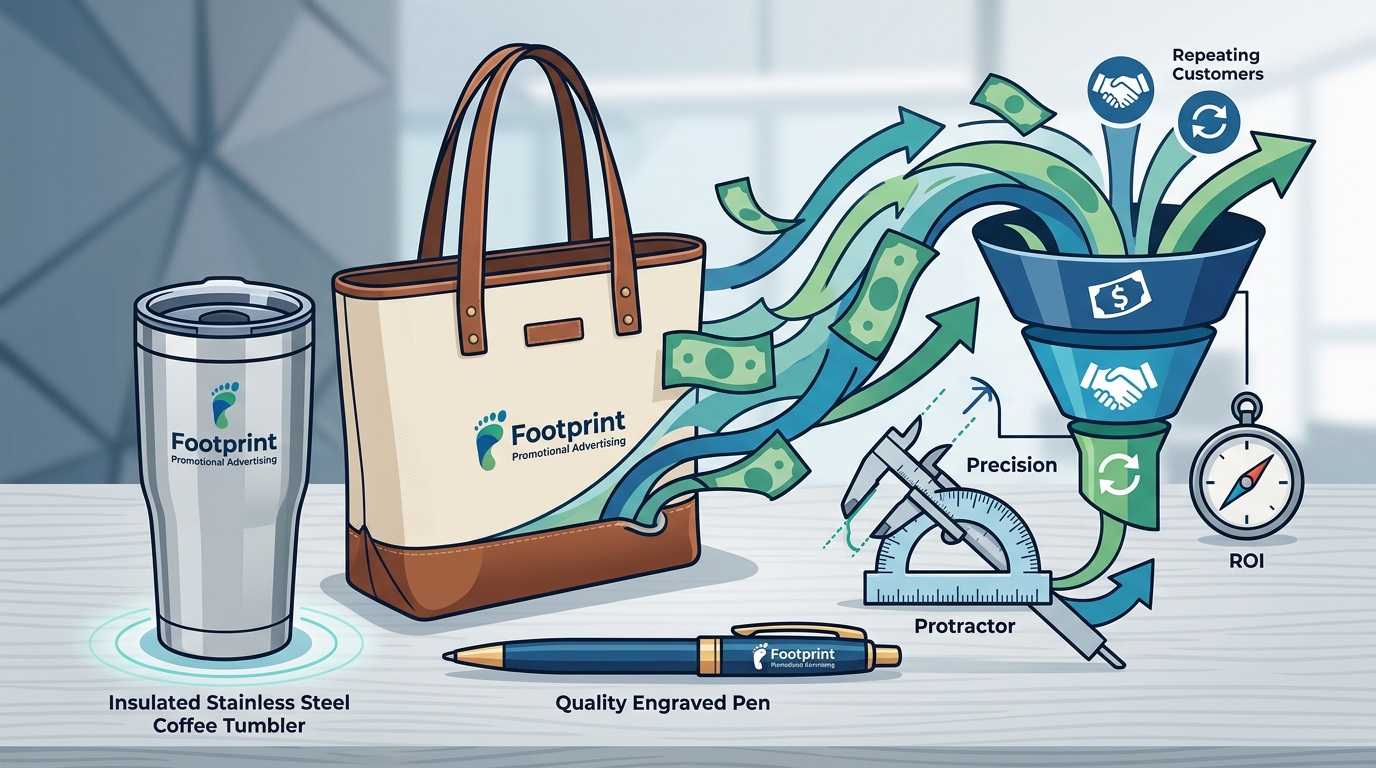
Measurable Marketing Outcomes From Strategic Branded Merchandise Selection
Research indicates that 83% of consumers are more likely to do business with a brand after receiving a promotional product. This statistic underscores a fundamental shift in marketing dynamics. Physical items create tangible touchpoints that digital ads simply cannot replicate. When executed with precision, branded merchandise transforms from a cost center into a measurable revenue driver. This guide details how to select, deploy, and track high-impact promotional items to secure a clear return on investment.
Understanding the ROI of Physical Goods
Traditional marketing channels often suffer from attribution gaps. Digital impressions are easy to count but hard to connect to final sales. Branded merchandise bridges this gap by entering the consumer's daily life. The longevity of the item directly correlates with brand recall duration. A high-quality t-shirt worn for months provides repeated exposure without additional ad spend.
Footprint Promotional Advertising specializes in creating custom, high-quality promotional products that will get your business noticed. By focusing on utility and quality, brands ensure that the item remains in circulation rather than ending up in a landfill. This sustained visibility is the first step toward measurable outcomes. The goal is to move beyond vanity metrics like "views" to tangible engagement indicators.
According to industry data, promotional products can generate a significant return on investment when the right items are chosen. The key lies in aligning the product with the target audience's lifestyle. A tech company might find success with branded USB hubs, while a healthcare provider may see better results with branded first aid kits. Understanding this alignment is critical for calculating accurate ROI.
Strategic Selection Criteria
Selecting the right promotional item requires a deep understanding of your audience. Generic items often fail to generate interest. Instead, focus on products that solve a problem or enhance the user's daily routine. This approach ensures the item is perceived as a valuable gift rather than disposable clutter.
Utility Over Novelty
Items that serve a functional purpose have a higher retention rate. Drinkware, for example, is a staple in both office and home environments. A branded water bottle used daily keeps your logo in front of the user and their colleagues. This repeated exposure builds familiarity and trust over time. Footprint Promo offers a wide range of drinkware options, including travel mugs and tumblers, to suit various preferences.
Audience Alignment
Consider the demographics and interests of your target market. If you are targeting corporate executives, premium items like leather journals or high-end pens may be more effective than cheap plastic pens. Conversely, for a youth-oriented campaign, trendy apparel or tech accessories might yield better engagement. The goal is to make the recipient feel valued through the quality of the gift.
For more insights on choosing the right items, explore our Quick Guides on promotional apparel fabrics and styles. These resources provide detailed information on materials and decoration methods to help you make informed decisions.
Decoration Methods and Brand Integrity
The method used to apply your logo significantly impacts the perceived value of the item. Poor quality printing can damage brand reputation, while high-quality decoration enhances it. Understanding the technical differences between decoration methods is essential for maintaining brand integrity.
Screen Printing vs. Embroidery
Screen printing is ideal for large orders and vibrant colors. It offers a durable finish that withstands frequent washing. Embroidery, on the other hand, adds a premium texture and is often associated with higher quality. It is particularly effective for caps, polos, and jackets. Footprint Promotional Advertising provides expert guidance on selecting the best decoration method for your specific product and budget.
Vector vs. Raster Art
Using the correct file format is crucial for crisp, professional results. Vector graphics are scalable without loss of quality, making them ideal for logos. Raster images, such as JPEGs, can become pixelated when enlarged. Always provide vector files to your printer to ensure the highest quality output. You can learn more about the technical aspects of art preparation in our Vector vs. Raster Art guide.
For a deeper dive into color matching, refer to our CMYK vs PMS guide. This resource explains how to ensure your brand colors are accurately reproduced on various materials.
Tracking Metrics and Attribution
Measuring the success of a branded merchandise campaign requires specific tracking mechanisms. Without proper attribution, it is difficult to determine the true impact of your investment. Implementing these strategies allows you to quantify the value of your promotional products.
Unique Promo Codes
Include unique discount codes on the merchandise or in the accompanying materials. These codes allow you to track direct sales generated from the campaign. For example, a branded tote bag with a unique code for online shopping can directly link purchases to the physical item. This method provides clear data on conversion rates and revenue attribution.
QR Codes and Custom URLs
Integrating QR codes or custom short URLs into the product packaging or the item itself can drive traffic to specific landing pages. Monitor the click-through rates and time spent on these pages. This data helps you understand user engagement and interest levels. It also allows for retargeting campaigns to nurture leads generated from the merchandise.
For assistance with graphic design and logo integration, visit our Graphic & Logo Design services. Our team can help you create assets that are optimized for both print and digital tracking.
Product Category Comparison
Choosing the right product category depends on your campaign goals and budget. The table below compares common promotional product categories based on utility, durability, and brand visibility.
| Category | Primary Use Case | Durability | Brand Visibility | Best For |
|---|---|---|---|---|
| Apparel | Daily wear | High | Very High | Brand awareness and community building |
| Drinkware | Hydration | High | High | Office and home visibility |
| Tech Accessories | Device support | Medium | Medium | Tech-savvy audiences |
| Bags & Totes | Carrying items | High | Very High | Mobile advertising |
| Office Supplies | Desk organization | Medium | Medium | B2B client appreciation |
Key Takeaways
- 83% of consumers are more likely to do business with a brand after receiving a promotional product, highlighting the direct impact on sales potential.
- Utility drives retention. Items that serve a functional purpose in daily life have significantly higher long-term brand exposure than novelty items.
- Quality matters. High-quality materials and professional decoration methods protect brand reputation and enhance perceived value.
- Tracking is essential. Use unique promo codes, QR codes, and custom URLs to attribute sales and engagement directly to your merchandise campaign.
- Audience alignment is key. Select products that resonate with your target demographic's lifestyle and professional needs.
- Footprint Promo offers comprehensive services including Promotional Products, Website Design, and Marketing to support your campaign.
- Vector art is required. Always provide vector files for logos to ensure crisp, scalable, and professional printing results.
Frequently Asked Questions
How do I calculate the ROI of branded merchandise?
To calculate ROI, compare the total cost of the campaign against the revenue generated from tracked metrics. Use unique promo codes or dedicated landing pages to attribute sales directly to the merchandise. Divide the net profit by the total cost and multiply by 100 to get the percentage.
What is the difference between CMYK and PMS color matching?
CMYK is a four-color process used for full-color printing, while PMS (Pantone Matching System) uses specific ink colors for precise brand color reproduction. PMS is recommended for logos where color accuracy is critical. Learn more in our CMYK vs PMS guide.
How long does it take to receive promotional products?
Production times vary based on the product type, quantity, and decoration method. Footprint Promo is focused on making your brand stand out and building relationships with current and future customers, which includes ensuring on-time delivery. Contact us for specific lead times for your order.
Can I get custom designs for my promotional items?
Yes, Footprint Promo offers Graphic & Logo Design services to create custom artwork tailored to your brand. Our team can help you select the best products and decoration methods to achieve your desired look.
What are the best eco-friendly promotional products?
Eco-friendly options include products made from recycled materials, such as recycled polyester apparel, bamboo drinkware, and biodegradable packaging. These items appeal to environmentally conscious consumers and align with corporate sustainability goals. Explore our Eco-Friendly collection for more options.
How do I ensure my logo looks good on all products?
Use high-resolution vector files for your logo. Different products may require adjustments to the design for optimal visibility. Our Decoration Methods guide provides detailed information on how different techniques affect logo appearance.
What is the minimum order quantity for promotional products?
Minimum order quantities vary by product and decoration method. Some items may have lower minimums for digital printing, while others may require larger runs for screen printing. Contact our team for specific details on your desired items.
Start Your Campaign
Transform your marketing strategy with measurable outcomes from strategic branded merchandise. Partner with Footprint Promotional Advertising to create high-impact campaigns that drive real results. Visit our Contact Us page to discuss your project or call us at 866.740.3701 for a personalized quote. Let us help you get your business noticed.