
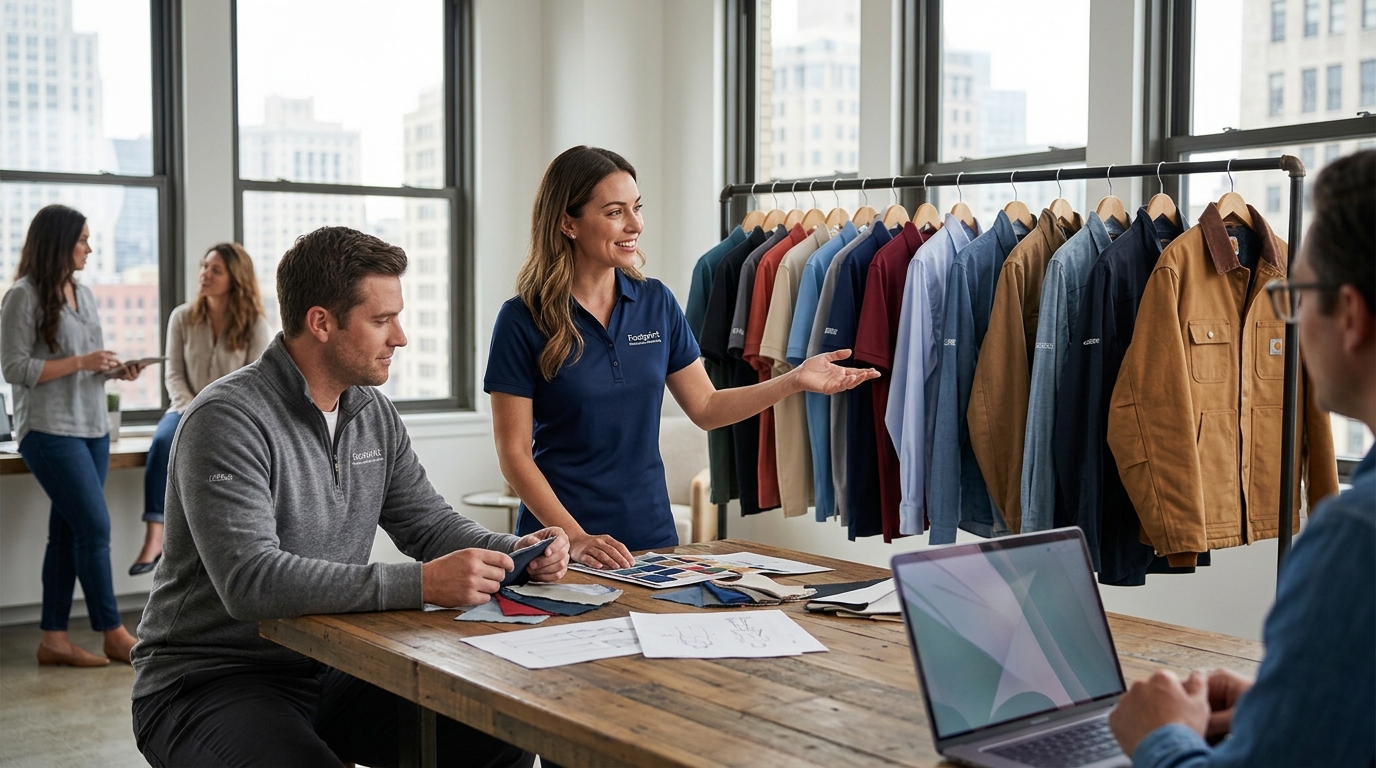
Custom branded apparel is no longer just a marketing afterthought; it is a critical operational asset for modern enterprises. According to recent industry data, companies that invest in high-quality branded uniforms see a significant increase in employee morale and brand recognition, with some reports indicating a 20% boost in customer trust when staff wear consistent, professional attire. This shift has created a massive demand for reliable vendors who can deliver everything from executive polos to heavy-duty workwear across the United States.
The Branded Apparel Industry Landscape
The market for corporate uniforms and branded apparel in the United States is vast and highly specialized. It is not limited to simple t-shirt printing. The industry encompasses a wide range of services, including embroidery, screen printing, direct-to-garment (DTG) printing, and custom dyeing. These services are provided by a mix of large-scale national distributors and specialized regional decorators.
Branded apparel is defined as any clothing item that features a company logo, slogan, or specific color scheme to promote brand identity or ensure uniformity among staff. This definition extends beyond traditional uniforms to include promotional merchandise given to clients or partners. The goal is always to create a cohesive visual language that reinforces brand values.
Major players in this space focus on different segments. Some specialize in high-volume, low-cost items for trade shows, while others focus on premium, durable workwear for industrial sectors. Understanding this distinction is crucial for businesses seeking quality over quantity or vice versa. For more insights on industry trends, you can explore Footprint Promo Blog resources.
How to Choose the Right Vendor
Selecting a vendor for branded company apparel requires careful evaluation of several key factors. The first consideration is the range of products offered. A robust vendor should provide access to a wide variety of blank garments, from basic cotton tees to technical performance fabrics.
Another critical factor is the decoration capabilities. Does the vendor offer embroidery for a premium look? Do they have screen printing for large, bold graphics? Or do they specialize in direct-to-garment printing for complex, full-color designs? The best vendors, such as those found at Footprint Promo Services, offer multiple decoration methods to suit different brand aesthetics.
Reliability and turnaround time are also paramount. Businesses often need uniforms for new hires or events on tight deadlines. A vendor with a strong supply chain and efficient production workflow can prevent costly delays. Additionally, customer service quality plays a huge role. Access to dedicated account managers and easy-to-use art upload tools can streamline the entire process.
Core Product Categories for Businesses
Branded apparel is not one-size-fits-all. Different industries require different types of garments. Below is a breakdown of the most common categories requested by US businesses.
Apparel and Workwear
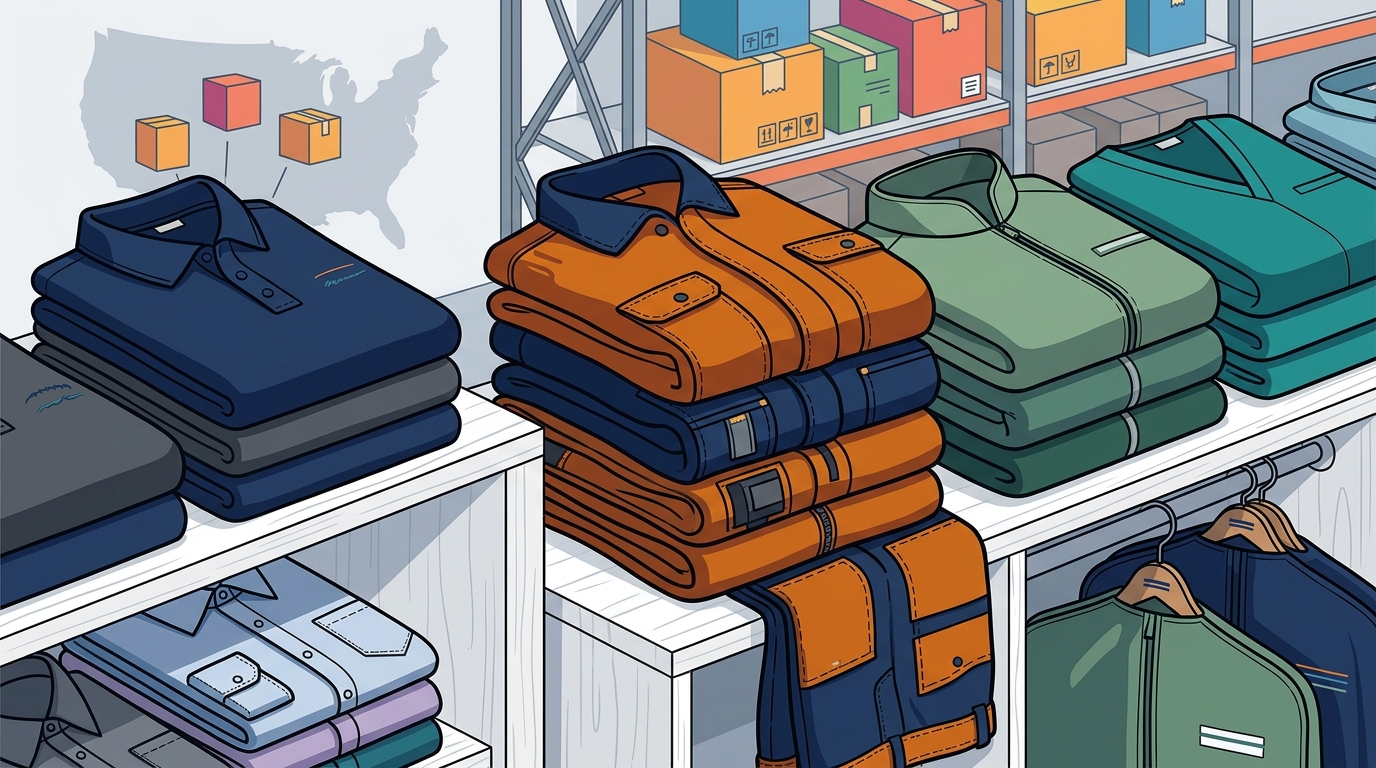
This is the most common category. It includes t-shirts, polos, hoodies, and jackets. For industrial clients, workwear such as Dickies or Carhartt-style pants and shirts are essential. These garments are designed to withstand harsh conditions while maintaining a professional appearance. Footprint Promotional Advertising offers a comprehensive catalog of these items.
Bags and Totes
Branded bags are a staple of corporate gifting and trade show marketing. Tote bags, backpacks, and duffel bags provide high visibility for brand logos. They are practical for employees and clients alike, extending brand reach beyond the office walls.
Headwear and Accessories
Caps, beanies, and visors are popular for outdoor events and casual brand promotion. Accessories like watches, sunglasses, and gloves add value to executive gift packages. These items often have higher perceived value and are kept longer by recipients.
Top Brands Used by US Vendors
Reputable vendors partner with established garment manufacturers to ensure quality and consistency. The choice of blank brand significantly impacts the final product's durability and comfort. Here are some of the most trusted brands in the industry:
| Brand Name | Specialty | Best Use Case |
|---|---|---|
| Gildan | Basic Cotton | High-volume events, casual wear |
| Bella + Canvas | Premium Soft | Modern branding, fashion-forward looks |
| Nike | Performance | Athletic teams, active work environments |
| The North Face | Outerwear | Winter uniforms, outdoor staff |
| Dickies | Durable Workwear | Industrial, construction, healthcare |
Using established brands like Port & Company or Sport-Tek ensures that your employees are wearing garments they will actually want to wear. This increases compliance with uniform policies and improves overall satisfaction.
The Procurement and Fulfillment Workflow
Ordering branded apparel involves several steps to ensure accuracy and quality. The process typically begins with selecting the desired garments from a vendor's catalog. Next, businesses must prepare their artwork for decoration. This often involves vectorizing logos for embroidery or preparing high-resolution files for printing.
Once the artwork is ready, it is uploaded to the vendor's platform. Many vendors, including Footprint Promo Art Upload, provide digital proofing services. This allows clients to review a mockup of the final product before production begins. This step is crucial for catching errors in color, placement, or sizing.
After approval, the production phase begins. This can take anywhere from a few days to several weeks, depending on the complexity of the order and the volume. Finally, the items are shipped to the client. Some vendors offer drop-shipping services, allowing them to send items directly to individual employees or branch locations, which simplifies logistics for large organizations.
Key Takeaways
- Strategic Investment: Branded apparel boosts brand recognition and employee morale, with some studies showing up to a 20% increase in customer trust.
- Vendor Diversity: The US market includes both national distributors and specialized decorators, each offering unique advantages in price and service.
- Quality Matters: Partnering with established blank brands like Nike, Gildan, and Dickies ensures durability and employee satisfaction.
- Decoration Options: Choose between embroidery, screen printing, and DTG based on your brand's aesthetic and budget.
- Workflow Efficiency: Utilizing digital art upload and proofing tools can significantly reduce errors and turnaround times.
- Logistics Solutions: Drop-shipping services are available for large-scale deployments to multiple locations.
- Comprehensive Catalogs: Leading vendors offer a wide range of products, from workwear to executive gifts, under one roof.
Frequently Asked Questions
What is the difference between embroidery and screen printing?
Embroidery uses thread to stitch a design onto the fabric, offering a premium, durable look. Screen printing uses ink pressed through a mesh screen, which is better for large, colorful designs and is often more cost-effective for high volumes.
How long does it take to receive branded apparel?
Turnaround times vary by vendor and decoration method. Standard embroidery can take 5-7 business days, while screen printing may take 7-10 days. Rush services are often available for urgent needs.
Can I order samples before placing a bulk order?
Yes, most reputable vendors allow you to order samples. This is highly recommended to check the quality of the blank garment and the decoration before committing to a large order.
What is the minimum order quantity for custom apparel?
Minimum order quantities (MOQs) depend on the decoration method. Embroidery often has higher MOQs due to setup costs, while screen printing can sometimes accommodate smaller runs. Some vendors offer no MOQ for certain digital printing methods.
Do vendors offer eco-friendly apparel options?
Yes, many vendors now offer sustainable options, such as organic cotton, recycled polyester, and biodegradable packaging. These options are increasingly popular for companies with strong corporate social responsibility goals.
How do I prepare my logo for decoration?
Logos should be provided in a vector format (such as AI, EPS, or SVG) for the best results. This ensures the design can be scaled without losing quality. High-resolution PNGs may also be accepted for certain printing methods.
What is the best way to care for branded apparel?
Care instructions depend on the garment and decoration. Generally, washing inside out in cold water and tumble drying on low helps preserve the integrity of both the fabric and the decoration. Avoid using bleach or fabric softeners.
Get Your Custom Quote Today
Ready to elevate your brand with professional, high-quality apparel? Whether you need uniforms for your team, promotional items for your next event, or executive gifts for your clients, the right vendor can make all the difference. Contact Footprint Promo today to discuss your needs and receive a personalized quote. Visit our product catalog to explore our extensive range of branded solutions.