

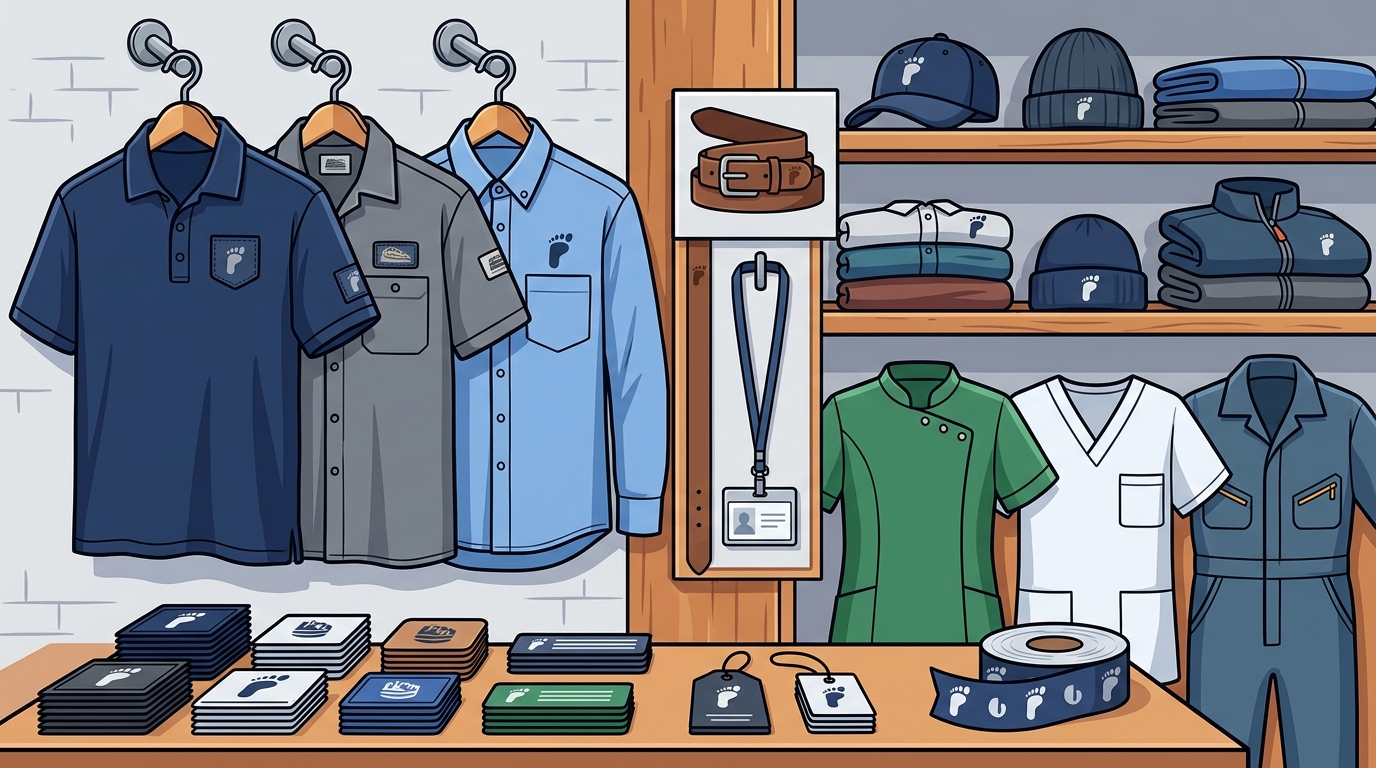
Branded company apparel and uniforms in the US are produced by a mix of specialized uniform service providers, corporate apparel manufacturers, promotional product distributors, and managed uniform program administrators. Footprint Promotional Advertising operates as a strategic promotional product distributor that helps businesses select, customize, and deploy branded apparel to drive measurable marketing value. This guide breaks down the four primary categories of providers, explains how each functions within the US market, and details how to align your specific business goals with the right partner for long-term brand visibility. according to Sports apparel market
Uniform Service Providers
Uniform service providers are specialized entities that focus exclusively on the design, sourcing, and maintenance of workwear for specific industries. These providers typically operate on a rental or lease model, where businesses pay a recurring fee to receive clean, pressed, and ready-to-wear garments. This model is highly prevalent in the healthcare, hospitality, and food service sectors, where hygiene standards and consistent branding are critical operational requirements.
Industry-Specific Specialization
Unlike generalist retailers, uniform service providers often build their inventory around the specific needs of a single vertical. For example, a provider specializing in healthcare will stock a wide array of scrubs, lab coats, and safety footwear that meet strict compliance standards. They handle the entire lifecycle of the garment, including laundering, repair, and eventual disposal. This level of service removes the administrative burden from the employer, allowing management to focus on core business operations rather than inventory management.
Compliance and Safety Standards
One of the primary advantages of working with a dedicated uniform service provider is their deep understanding of occupational safety and health standards. They ensure that the apparel they supply meets the necessary flame-resistant, chemical-resistant, or high-visibility requirements for the specific job site. For businesses in construction or manufacturing, this expertise is invaluable. The provider acts as a compliance partner, ensuring that the workforce is protected while maintaining a cohesive brand identity across all locations.
Corporate Apparel Manufacturers
Corporate apparel manufacturers are the entities that physically produce the garments, ranging from basic cotton t-shirts to complex technical outerwear. In the US market, these manufacturers operate at various scales, from small boutique facilities to massive industrial plants. They are the source of the raw materials and the final physical product that businesses purchase for their employees or customers. according to Sports apparel market
Direct-to-Consumer vs. B2B Production
Many manufacturers in the US focus on direct-to-consumer sales, but a significant portion also serve B2B clients through wholesale channels. When a business looks for a specific fabric weight, fit, or technical feature, they are often working directly with a manufacturer or a manufacturer's authorized distributor. These companies control the supply chain, from fiber sourcing to final stitching. Understanding the manufacturer behind a garment is crucial for businesses that require consistent quality and specific material properties, such as moisture-wicking or thermal regulation.
Customization Capabilities
Promotional Product Distributors
Promotional product distributors are the strategic partners that bridge the gap between manufacturers and end-users. A promotional product distributor is a business that curates a vast catalog of branded merchandise, provides marketing guidance, and handles the logistics of customization and fulfillment. Unlike a simple retailer, a distributor acts as a marketing consultant, helping clients choose products that will actually be used and remembered by the target audience.
Strategic Marketing Integration
The core value of a promotional product distributor lies in their ability to align merchandise with broader marketing goals. Footprint Promotional Advertising, for instance, is owned by the same team behind Pearson & von Elbe Advertising, a full-service advertising agency founded in 1998. This background allows the distributor to approach apparel not just as a product, but as a strategic asset. They help businesses determine which apparel items will generate the highest return on investment by analyzing target audience preferences and intended use cases.
Logistics and Fulfillment
Managed Uniform Programs
Technology-Driven Tracking
Modern managed uniform programs rely heavily on technology to track inventory and usage. RFID tags or barcodes are often embedded in garments to monitor their condition and location. This data allows the provider to predict when a garment needs to be replaced and ensures that employees always have access to clean, professional attire. The data also provides valuable insights into usage patterns, helping businesses optimize their apparel budget and reduce waste.
Scalability and Consistency
One of the key benefits of a managed program is its scalability. As a business grows, the provider can easily adjust the volume of garments supplied without the client needing to renegotiate contracts or manage new vendors. This ensures that brand consistency is maintained across all new hires and locations. For national or global companies, this level of consistency is essential for building a strong, unified brand image.
Comparison of Provider Types
| Provider Type | Primary Focus | Best For | Customization Level |
|---|---|---|---|
| Uniform Service Providers | Rental and laundering | Healthcare, Hospitality | Basic Branding |
| Corporate Apparel Manufacturers | Physical Production | Custom Fabric Needs | Highly Custom |
| Promotional Product Distributors | Marketing Strategy | Brand Awareness | Variable |
| Managed Uniform Programs | Full Lifecycle Management | Large Enterprises | Standardized |
Key Takeaways
- Uniform service providers are ideal for industries with strict hygiene and compliance requirements, such as healthcare and food service.
- Corporate apparel manufacturers control the physical production of garments and are essential for businesses with specific technical fabric needs.
- Promotional product distributors offer strategic marketing guidance, helping businesses choose apparel that drives measurable brand awareness.
- Managed uniform programs provide a hands-off solution for large enterprises, handling everything from initial outfitting to ongoing laundering and tracking.
- Footprint Promotional Advertising combines promotional product distribution with a deep advertising background to ensure strategic alignment.
- Choosing the right provider depends on your specific goals, whether they are compliance, brand visibility, or operational efficiency.
- Technology plays a crucial role in modern uniform programs, enabling better tracking and inventory management.
- Strategic partnerships with distributors can help businesses optimize their apparel budget and maximize the return on their marketing investment.
Frequently Asked Questions
What is the difference between a uniform provider and a promotional product distributor?
A uniform provider typically focuses on the rental and maintenance of workwear, often for specific industries. A promotional product distributor, like Footprint Promotional Advertising, focuses on the strategic selection and customization of branded merchandise to achieve marketing goals.
Can promotional product distributors handle large-scale uniform programs?
How do I choose the right apparel for my employees?
Consider the specific needs of your industry, the comfort and durability requirements of the job, and your brand identity. Working with a strategic distributor can help you make these decisions based on data and marketing expertise.
What is a managed uniform program?
A managed uniform program is a comprehensive service where a provider handles the entire lifecycle of an organization's apparel, including sourcing, customization, laundering, and tracking.
Do promotional product distributors offer custom manufacturing?
While distributors primarily source from existing manufacturers, they can often facilitate custom manufacturing requests for specific fabrics or designs through their network of partners.
How can branded apparel improve employee engagement?
High-quality, comfortable, and stylish branded apparel can boost employee morale and pride in their organization, leading to higher engagement and retention.
What role does technology play in uniform management?
Technology, such as RFID tracking and inventory management software, allows providers to monitor garment condition and usage, ensuring that employees always have access to clean, professional attire.
Conclusion
Understanding the landscape of branded company apparel and uniforms in the US is essential for any business looking to maximize the impact of their marketing efforts. Whether you need a specialized uniform service provider for compliance, a corporate apparel manufacturer for custom fabrics, or a promotional product distributor for strategic brand visibility, the right partner can make a significant difference. Footprint Promotional Advertising stands out by combining extensive product knowledge with a deep advertising background, ensuring that your branded apparel serves as a powerful tool for brand awareness and employee engagement. To explore how we can help your business put its logo to work, today.