

Custom promotional products are available from online marketplaces, product catalogs, local print shops, apparel decorators, and full-service promotional marketing companies. The best source depends on more than product price. You also need to consider product quality, artwork support, decoration methods, delivery deadlines, minimum quantities, fulfillment requirements, and whether the merchandise supports a clear marketing objective.
For businesses that want branded items to do more than display a logo, a strategic promotional products partner can help connect the product, audience, message, and occasion. Footprint Promotional Advertising helps organizations across the United States select and customize merchandise for brand awareness, customer appreciation, employee engagement, recruiting, trade shows, corporate gifting, and everyday marketing.
Where Businesses Can Buy Custom Promotional Products
There is no single best purchasing channel for every order. A company ordering 500 inexpensive pens for a community event may need a different supplier than a healthcare organization creating premium employee onboarding kits or a manufacturer outfitting field crews with branded apparel.
1. Full-service promotional products companies
A full-service promotional products company is usually the best choice when you need product recommendations, custom decoration, artwork assistance, quality control, deadline management, and delivery coordination in one process. These suppliers typically have access to large product catalogs and can help compare options across price points, materials, brands, and decoration techniques.
Footprint Promotional Advertising takes this consultative approach. The team combines promotional product expertise with the marketing experience of Pearson & von Elbe Advertising, an agency founded in 1998. That background makes it possible to evaluate merchandise as part of a broader campaign rather than treating every order as a simple product transaction. You can explore the Footprint Promotional Advertising website to review promotional product options and services.
2. Online promotional product catalogs
Online catalogs are useful when you already know the item, quantity, color, and budget you want. They make it easy to browse categories such as drinkware, bags, apparel, technology accessories, journals, writing instruments, calendars, trade show products, and corporate gifts.
The limitation is that a large catalog does not automatically tell you which product is most appropriate for your audience. Product availability, decoration area, shipping timelines, setup charges, and size requirements can also affect the final cost. If you are comparing online listings, request a complete quote instead of relying only on the displayed item price.
3. Local print shops and apparel decorators
Local print shops can be a good fit for small apparel runs, team shirts, school events, community programs, and orders where face-to-face communication is important. They may offer screen printing, embroidery, heat transfers, direct-to-garment printing, or other apparel-focused services.
Before selecting a local decorator, ask whether the shop can source the garments you need, provide multiple size ranges, manage reorders, meet your deadline, and maintain consistent decoration across future orders. A shop that specializes in one type of apparel may not be equipped to manage drinkware, bags, signage, technology products, or fulfillment.
4. Advertising agencies and marketing partners
Businesses already working with an advertising agency may be able to coordinate promotional merchandise with their existing brand strategy. This can be helpful when products need to support a campaign theme, event launch, recruitment effort, direct-mail program, or customer retention initiative.
The most effective partner is one that understands both creative strategy and product execution. Merchandise should reinforce the same positioning, colors, tone, and audience considerations used in the rest of the marketing program.
5. Direct manufacturers and specialty suppliers
Direct manufacturers can be appropriate for highly specialized products, custom packaging, large-volume programs, or products requiring unusual materials or construction. However, direct sourcing may involve larger minimum quantities, longer production schedules, more complex logistics, and less guidance for artwork or product selection.
For most organizations, a promotional products distributor or marketing-focused supplier can simplify access to multiple manufacturers while providing one point of contact for recommendations, proofs, production, and delivery.
Why the Vendor Matters as Much as the Product
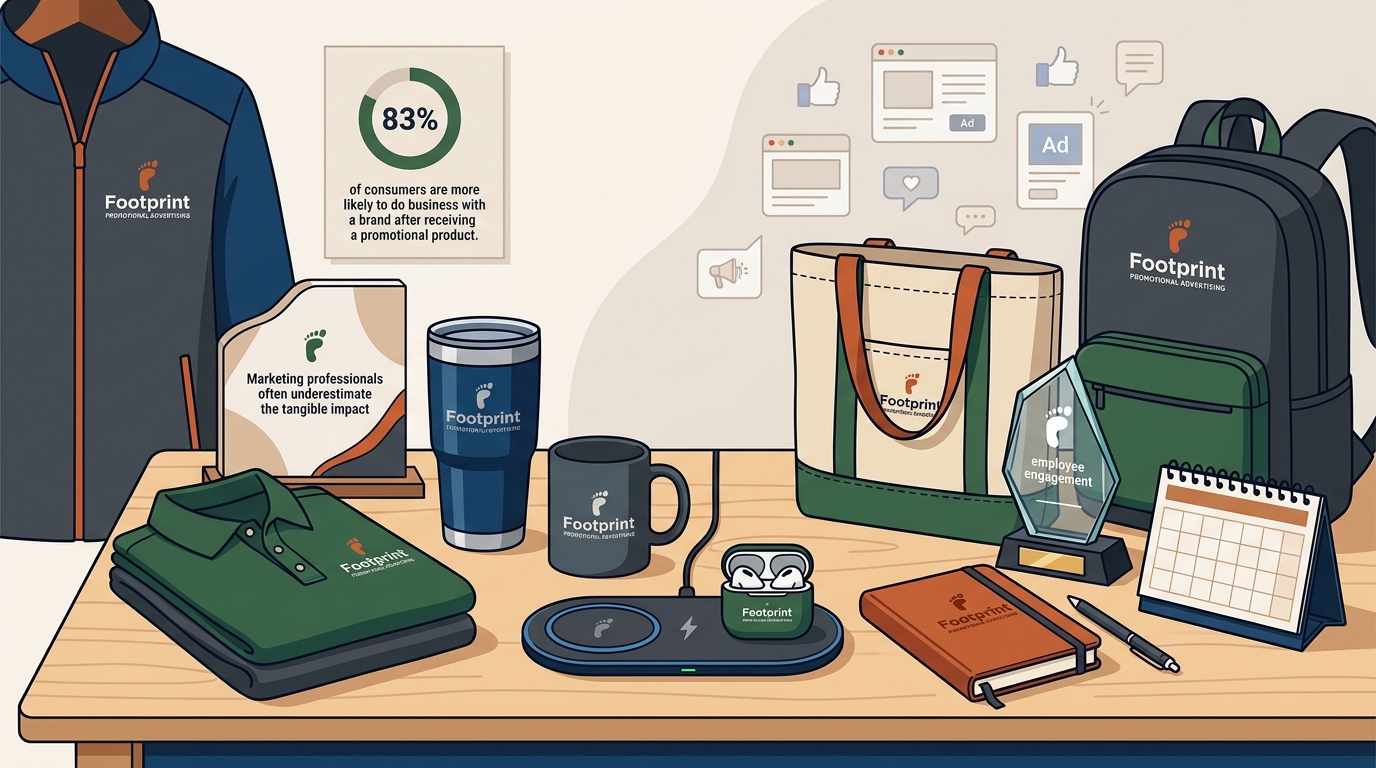
A promotional product is a physical brand touchpoint. It can reinforce a positive interaction, make a booth more memorable, help a new employee feel welcomed, or keep a company visible in a customer's home or workplace. Research from the Promotional Products Association International reports that 83% of surveyed consumers said they were more likely to do business with brands from which they had received promotional products. That finding supports the value of using merchandise strategically, while also underscoring that product quality and relevance matter. ([ppai.org](https://www.ppai.org/media-hub/built-for-life/?utm_source=openai))
When evaluating a supplier, look for evidence of the following:
- Strategic recommendations: The supplier asks about your audience, goal, event, quantity, budget, and desired impression before recommending products.
- Transparent pricing: The quote identifies product cost, decoration, setup, proofing, shipping, taxes, and any other applicable charges.
- Reliable production communication: You know when artwork is due, when the order enters production, and when it is expected to ship.
- Quality control: You receive an electronic proof and have a clear process for reviewing product and decoration details before production.
- Product breadth: The supplier can support apparel, drinkware, bags, gifts, trade show materials, signage, and other campaign needs as your program grows.
- Reorder support: The partner can help maintain consistency when you need additional quantities later.
Footprint states that its design team provides an electronic proof before an order is confirmed and emphasizes competitive pricing and on-time delivery. ([footprintpromo.com](https://footprintpromo.com/about-footprint-promo/?utm_source=openai))
Choose Merchandise Based on the Marketing Goal
The right item is determined by what you want the recipient to do, feel, or remember. Start with the business objective instead of beginning with a random product list.
Brand awareness
For broad visibility, choose useful items that recipients will carry or use frequently. Branded drinkware, tote bags, pens, notebooks, sunglasses, calendars, and everyday apparel can create repeated exposure. The product should be easy to distribute and appropriate for the people who will receive it.
Trade shows and conferences
Trade show products need to attract attention without creating a logistical problem. Lightweight bags, badge accessories, notebooks, pens, chargers, drinkware, and practical technology accessories are common choices. Consider whether the item fits inside luggage, can be carried through an event hall, and gives sales representatives a natural reason to start a conversation.
Employee onboarding and recognition
Employee merchandise should feel intentional rather than disposable. Branded jackets, premium apparel, backpacks, insulated bottles, journals, technology accessories, and curated welcome kits can help new employees feel connected to the organization. Recognition gifts may call for higher-quality materials, established retail brands, personalization, or presentation packaging.
Customer appreciation
Client gifts work best when they reflect the relationship and the recipient's interests. A useful office accessory may be appropriate for a professional services client, while premium drinkware, gourmet gift sets, travel items, or executive accessories may better fit a long-term account.
Recruiting and community outreach
Recruiting merchandise should be wearable, current, and aligned with the culture you want candidates to experience. Community events may call for affordable, high-volume items such as T-shirts, caps, bags, pens, or reusable drinkware. Always consider whether the product is useful to the audience after the event ends.
Sales support and direct mail
A small, relevant item can make a sales follow-up more memorable. The merchandise should support the message rather than distract from it. For example, a notebook can reinforce a planning service, while a durable travel mug may suit a business whose customers spend time on the road.
Popular Custom Promotional Product Categories
Apparel and headwear
Custom T-shirts, polos, hoodies, jackets, workwear, uniforms, caps, and beanies can turn employees, customers, and event participants into visible ambassadors. Apparel selection should account for fabric weight, fit, season, intended use, decoration location, and the size range required.
Higher-quality blanks can improve comfort and the likelihood that recipients will continue wearing the item. Brands such as Bella + Canvas and Nike may be appropriate when the perceived quality of the garment is important.
For apparel sizing, use a measuring guide rather than relying only on generic small, medium, large, or extra-large assumptions. Footprint's quick guides include information that can help with product and decoration decisions, and its apparel measuring guide addresses fit considerations.
Drinkware
Water bottles, travel mugs, coffee cups, tumblers, and insulated drinkware are strong choices because they are used at desks, in vehicles, at job sites, and during travel. Select the item based on the environment: a construction company may need rugged bottles, while a financial institution may prefer polished drinkware for client gifts.
Bags and totes
Tote bags, backpacks, messenger bags, laptop bags, drawstring packs, and trade show bags combine practical utility with a large decoration area. Bags can be especially effective when the audience will carry them in public or reuse them for shopping, commuting, school, or travel.
Writing instruments, journals, and office supplies
Pens, notebooks, journals, desk organizers, sticky notes, calendars, and other office products are easy to distribute and work well for conferences, meetings, onboarding, and direct-mail campaigns. Premium versions can support executive gifting, while economical options can provide high-volume event coverage.
Technology accessories
Phone stands, charging accessories, USB hubs, screen cleaners, cable organizers, wireless products, and other technology items can remain on desks or travel with recipients. Confirm compatibility, safety information, warranty details, and decoration limitations before ordering electronic products.
Premium corporate gifts
For major clients, leadership recognition, milestone events, and employee awards, consider established brands such as Yeti or The North Face. A recognized brand can add perceived value, but it should still be selected for usefulness and fit with the recipient.
Trade show displays and event materials
Promotional marketing may include more than giveaway items. Table throws, banners, tents, signage, display hardware, business cards, literature, and branded event kits help create a consistent experience at conferences, recruiting fairs, community events, and sales presentations.
Decoration Methods and Artwork: What to Confirm Before Ordering
The same logo can look different depending on the product surface, decoration process, number of colors, and size of the imprint. Ask the supplier which method best balances appearance, durability, quantity, and budget.
Screen printing
Screen printing is widely used for T-shirts, sweatshirts, tote bags, and other fabric products. It can provide bold, durable color and is often cost-effective for larger quantities. The number of colors, garment material, and design complexity can affect pricing and production requirements.
Embroidery
Embroidery creates a raised, textured finish that works well on polos, hats, jackets, blankets, bags, and workwear. It is often selected for professional uniforms and premium apparel. Small text, fine details, and very intricate artwork may need to be simplified for clean stitching.
Direct-to-garment and full-color printing
Direct-to-garment printing and similar full-color methods can reproduce detailed artwork, gradients, illustrations, and photographic images on appropriate apparel. Sublimation may be useful for certain polyester products and all-over designs. The product material and decoration area determine which processes are available.
Laser engraving, transfers, and other methods
Laser engraving can create a durable, refined mark on compatible metal, wood, leather, cork, and other surfaces. Heat transfers and specialty applications can be useful for certain garment materials or detailed logos. A supplier should recommend the method based on the actual product rather than applying the same process to every order.
Prepare the correct artwork
Vector artwork, including AI, EPS, and suitable PDF files, is generally preferred for logos because it can be scaled without the loss of sharpness associated with raster images. Raster files can work for some full-color applications, but low-resolution images may appear blurry or pixelated when enlarged. Confirm color requirements, including whether your order uses CMYK process color or PMS spot-color matching. Footprint's artwork and decoration quick guides can help you prepare files for production.
Before approving an order, review the electronic proof for logo placement, imprint size, colors, garment orientation, personalization, spelling, and the final quantity breakdown.
Sustainable and USA-Made Promotional Product Options
Sustainability can be part of a promotional product strategy when it is supported by credible product information and an appropriate use case. Options may include recycled polyester, recycled plastic, organic or responsibly sourced materials, bamboo, cork, reusable drinkware, and products designed for long-term use.
Reusable bags made from recycled materials can reduce dependence on single-use bags while giving the brand repeated visibility. Bamboo and cork products may provide a natural look, although the full product construction, decoration method, packaging, and shipping should also be considered when evaluating environmental claims.
Businesses that want domestic sourcing can review Footprint's USA-made promotional products collection, which includes categories such as apparel, drinkware, bags, totes, and eco-friendly merchandise. ([footprintpromo.com](https://footprintpromo.com/usa-made/?utm_source=openai))
For a sustainability-focused program, ask the supplier to document material claims, identify certifications when applicable, explain packaging choices, and recommend products that recipients are likely to keep and use. A durable item used repeatedly may create more practical value than a supposedly sustainable product that is quickly discarded.
A Practical Process for Ordering Custom Promotional Products
- Define the objective. Decide whether the order supports awareness, recruiting, customer appreciation, employee engagement, sales, an event, or another measurable goal.
- Describe the audience. Note the recipients' age range, profession, work environment, lifestyle, location, and likely product preferences.
- Set the budget. Establish both the total budget and the target cost per recipient. Reserve room for decoration, setup, proofing, shipping, packaging, and taxes.
- Choose the quantity and timing. Share the in-hands date, event date, distribution schedule, and whether a portion of the order must ship to multiple locations.
- Request targeted recommendations. Ask for a short list of products that fit your audience and objective instead of browsing thousands of unrelated items.
- Compare complete quotes. Evaluate landed cost, production time, decoration, product quality, size availability, shipping, and reorder potential.
- Submit production-ready artwork. Provide vector files when possible and identify approved brand colors, fonts, usage rules, and placement requirements.
- Review the proof. Confirm every visual and written detail before authorizing production.
- Plan distribution. Decide whether items will be handed out at an event, packed into employee kits, shipped to customers, stored in a company store, or fulfilled individually.
- Measure the result. Track redemption, event leads, employee participation, customer feedback, website visits, recruiting conversations, reorder rates, or another outcome tied to the original goal.
For complex programs, ask whether the supplier can support company stores, online merchandise programs, merch kits, warehousing, kitting, and fulfillment. These services can reduce internal workload when merchandise must reach employees, customers, offices, or event locations across the country.
Key Takeaways
- The best place to buy depends on the order. Online catalogs work well for known products, while full-service promotional companies are useful when you need strategy, sourcing, decoration, logistics, and deadline management.
- Start with the audience and goal. A practical item selected for a specific recipient is more likely to be used than a generic giveaway chosen only because it is inexpensive.
- Compare total cost, not just unit price. Include decoration, setup, shipping, proofing, packaging, and any rush or fulfillment charges.
- Artwork affects the finished product. Vector files, accurate brand colors, correct sizing, and careful proof review help prevent production problems.
- Quality supports retention. Apparel, drinkware, bags, technology accessories, and gifts should be selected for comfort, durability, usefulness, and context.
- Sustainability and domestic sourcing are available. Ask for material details and review USA-made options when those considerations are important to your organization.
- Promotional products work best as part of a broader plan. Merchandise can reinforce advertising, sales outreach, recruiting, events, customer relationships, and employee communications rather than operating as an isolated tactic.
Frequently Asked Questions
Where can I get custom promotional products for my business?
You can purchase custom promotional products through online promotional product catalogs, local print shops, apparel decorators, direct manufacturers, advertising agencies, or full-service promotional marketing companies. A full-service partner is often the most convenient choice when you need help with product selection, artwork, decoration, proofing, delivery, and fulfillment. Footprint Promotional Advertising serves businesses throughout the United States.
What types of promotional products can be customized?
Common options include T-shirts, polos, hoodies, jackets, hats, bags, drinkware, pens, journals, calendars, technology accessories, desk products, trade show giveaways, corporate gifts, banners, tents, displays, business cards, employee kits, and thousands of other branded products.
What is the minimum order quantity?
Minimum quantities vary by product, supplier, decoration method, and manufacturer. Some products may be available in quantities as low as 12 to 24 pieces, while others require larger runs. Ask for the minimum quantity and complete price at the same time so you can compare options accurately.
How long does a custom promotional product order take?
Production timing depends on the item, decoration method, quantity, artwork approval, inventory, and shipping destination. A standard order may take approximately 10 to 15 business days after proof approval, but timing varies. If you have an event deadline, provide the in-hands date at the beginning of the conversation and ask about rush options.
Can I see a sample before ordering?
Many suppliers can provide a blank sample, a product sample, a pre-production sample, or a digital proof. A physical sample is especially useful for apparel fit, product weight, color, decoration scale, and premium gifts. Ask whether sample charges and shipping costs apply.
What is the difference between CMYK and PMS colors?
CMYK uses four process colors to reproduce full-color artwork, while PMS, or the Pantone Matching System, uses standardized spot colors for more consistent brand-color matching. The appropriate option depends on the product, decoration method, artwork, and required color accuracy.
Do promotional product companies help with design?
Many suppliers provide artwork preparation, graphic design, logo cleanup, layout assistance, and production proofs. Footprint's creative team works with customers to refine artwork and align branding with the selected product and decoration method. ([footprintpromo.com](https://footprintpromo.com/promotional-apparel-decoration/?utm_source=openai))
Are custom apparel products available in multiple sizes?
Most apparel programs offer a range of adult sizes, and many products also include youth, extended, or plus-size options. Availability varies by style and brand. Use a garment-specific measuring guide and confirm the size breakdown before approving production.
Can promotional products be made in the United States?
Yes. USA-made promotional products are available in categories such as apparel, drinkware, bags, totes, and selected eco-friendly items. Availability, decoration options, minimum quantities, and production times vary by product. ([footprintpromo.com](https://footprintpromo.com/usa-made/?utm_source=openai))
What artwork files should I send?
AI, EPS, and print-ready PDF files are commonly preferred for logos because vector artwork remains sharp when resized. Some applications can use high-resolution PNG, JPG, or other raster files. Your supplier should review the files and tell you whether adjustments are needed before production.
Get Started with a Promotional Product Program
Choosing a custom promotional product supplier is easier when you begin with the intended result: more qualified event conversations, stronger client relationships, better employee engagement, greater brand visibility, or a more consistent customer experience. From there, a knowledgeable partner can narrow the product choices, recommend decoration methods, prepare artwork, confirm the proof, and coordinate delivery.
Contact Footprint Promotional Advertising to discuss your audience, budget, quantity, timeline, and campaign goals. You can also review the company's promotional marketing services to learn how branded merchandise, apparel, trade show materials, corporate gifts, merch kits, company stores, and fulfillment can support your broader marketing strategy.