

Establishing a dedicated company store for branded merchandise is no longer just a perk for large enterprises. It is a critical component of modern corporate identity, employee engagement, and client relationship management. According to recent industry data, companies that implement structured gifting and merchandising programs see a significant increase in brand recall and employee retention rates. The global promotional products industry continues to expand, driven by the need for tangible brand touchpoints in an increasingly digital world. This guide details the exact operational steps to launch a high-performance internal or external store.
Understanding the Strategic Value
Before writing a single line of code or selecting a vendor, you must define the purpose of your company store. Is it an internal hub for employee rewards? A client appreciation portal? Or a public-facing revenue stream? The answer dictates your technology stack and inventory strategy.
Promotional products serve as physical reminders of your brand. When an employee wears a branded hoodie or uses a custom pen, they become a walking advertisement. This concept is known as brand reinforcement. The effectiveness of this strategy relies on the quality of the items and the ease of access. If the ordering process is cumbersome, participation drops. If the items are low quality, brand perception suffers.
For many organizations, the shift from ad-hoc gifting to a structured company store represents a maturation in their marketing operations. It allows for centralized budgeting, consistent branding, and data-driven inventory management. According to market analysis, the promotional products sector has shown resilient growth, indicating that businesses are prioritizing tangible brand assets over purely digital interactions.
Choosing the Right Platform
The foundation of your company store is the technology platform. You have three primary options: white-label e-commerce, specialized merchandising platforms, or custom-built solutions.
White-Label E-Commerce
Platforms like Shopify or WooCommerce offer flexibility. You can build a store that looks exactly like your brand. However, you must manually integrate product catalogs and handle fulfillment logistics. This option requires significant technical resources and ongoing maintenance.
Specialized Merchandising Platforms
Services like Spreadshirt, Teespring, or Printful offer built-in integration with printing and embroidery vendors. These platforms handle the heavy lifting of production and shipping. They are ideal for companies that want to launch quickly without managing a complex supply chain. The trade-off is less customization and higher per-unit costs.
Custom-Built Solutions
For large enterprises with unique needs, a custom solution using APIs from promotional product distributors is often the best route. This allows for deep integration with HR systems for employee discounts or CRM systems for client gifting. This approach requires a dedicated development team but offers the highest level of control and scalability.
When evaluating platforms, consider the ease of uploading artwork. A robust system should allow non-technical users to upload logos and apply them to products via a preview tool. This reduces the burden on your design team and speeds up the approval process.
Vendor Integration and Product Selection
Once the platform is selected, you must curate your product catalog. The key to a successful company store is offering a diverse range of high-quality items that appeal to different tastes and use cases.
Apparel and Headwear
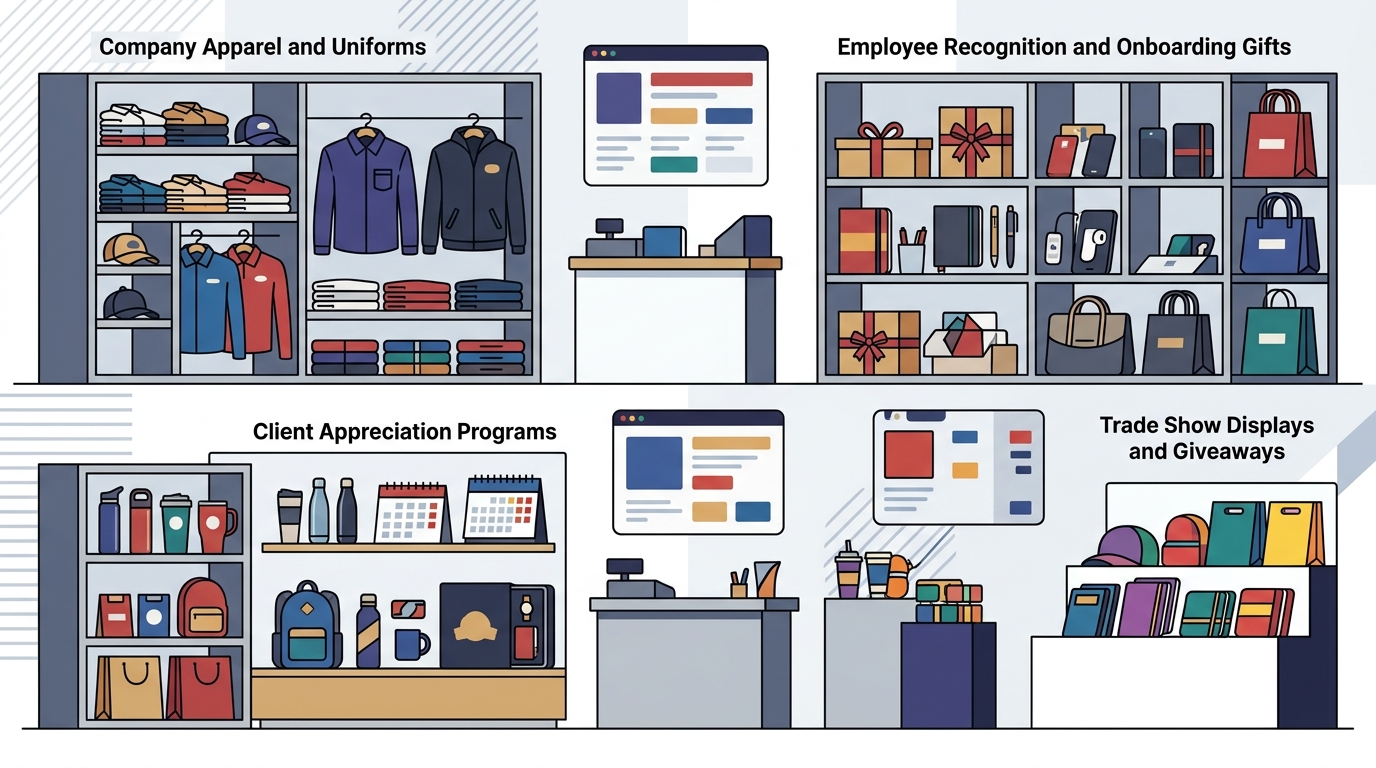
Apparel remains the most popular category for branded merchandise. It includes t-shirts, polos, hoodies, and hats. When selecting vendors, prioritize brands that offer a wide range of fits and fabrics. For example, offering both standard cotton and moisture-wicking performance fabrics ensures that your merchandise is suitable for various environments, from office casual to outdoor events.
Headwear, including caps and beanies, is another staple. These items are often worn in public, providing extended brand visibility. Ensure your vendor offers high-quality embroidery options for logos on hats, as screen printing can crack over time on curved surfaces.
Tech and Office Accessories
Tech accessories such as phone cases, laptop sleeves, and USB drives are highly valued by employees and clients. These items have a long lifespan and are used daily, keeping your brand top-of-mind. Office supplies like branded notebooks, pens, and desk organizers are also effective for corporate gifting.
Eco-Friendly Options
Sustainability is a growing concern for consumers and employees alike. Offering eco-friendly products, such as bags made from recycled materials or biodegradable drinkware, demonstrates corporate responsibility. This aligns your brand with modern values and can enhance your reputation among environmentally conscious stakeholders.
For a comprehensive selection of promotional products, including apparel, awards, and eco-friendly items, you can explore specialized vendors like Footprint Promotional Advertising. They offer a wide range of categories from drinkware to tech accessories, ensuring you can find the right items for any occasion.
Design Workflow and Approval
A streamlined design workflow is essential for maintaining brand consistency and efficiency. Without a clear process, you risk approving designs that do not meet brand guidelines or are technically unfeasible for production.
Brand Guidelines
Establish clear brand guidelines for your company store. This includes specifications for logo usage, color palettes, typography, and placement. These guidelines should be easily accessible to anyone who uploads artwork. Consistency is key to building a recognizable brand identity.
Artwork Upload and Preview
Enable an artwork upload feature that allows users to preview their designs before ordering. This reduces errors and returns. The preview tool should accurately represent how the final product will look, including the texture of the fabric or the finish of the material.
Approval Process
For large organizations, implement an approval workflow. Designers or brand managers can review and approve submissions before they go live. This ensures that all merchandise meets quality standards and brand requirements. It also helps prevent unauthorized or inappropriate designs from being produced.
If you need professional assistance with artwork or design, many vendors offer design services. For example, Footprint Promotional Advertising provides expert support for apparel decoration, ensuring your logos are applied correctly and professionally.
Fulfillment and Logistics
The final step in setting up your company store is managing fulfillment and logistics. This involves deciding how products will be produced, shipped, and delivered to recipients.
In-House vs. Outsourced Fulfillment
Small companies may choose to handle fulfillment in-house, printing and shipping items themselves. This offers greater control but can be labor-intensive and costly at scale. Larger companies often outsource fulfillment to specialized vendors who can handle production, quality control, and shipping efficiently.
Shipping and Tracking
Ensure your platform provides real-time shipping tracking. This allows recipients to know when to expect their items and reduces customer service inquiries. Consider offering multiple shipping options, including expedited shipping for urgent orders.
Returns and Exchanges
Establish a clear policy for returns and exchanges. Defective items should be replaced promptly. However, be wary of returns for non-defective items, as this can lead to abuse and increased costs. A well-defined policy protects your business while ensuring customer satisfaction.
For reliable and scalable fulfillment, consider partnering with established promotional product companies. Footprint Promotional Advertising offers comprehensive services that include order management and logistics support, helping you streamline your operations.
Key Takeaways
- Define Your Purpose: Clarify whether the store is for employees, clients, or the public to guide platform and product selection.
- Choose the Right Platform: Balance customization needs with operational ease by selecting between white-label, specialized, or custom solutions.
- Diversify Product Catalog: Offer a mix of apparel, tech accessories, and eco-friendly items to appeal to a broad audience.
- Streamline Design Workflow: Implement clear brand guidelines and preview tools to maintain consistency and reduce errors.
- Optimize Fulfillment: Decide between in-house and outsourced fulfillment based on your volume and resource capacity.
- Leverage Expert Partners: Collaborate with experienced vendors like Footprint Promotional Advertising for high-quality products and reliable service.
- Monitor and Iterate: Regularly review sales data and feedback to refine your product offerings and improve the user experience.
Frequently Asked Questions
What is the best platform for a company store?
The best platform depends on your size and technical resources. Small businesses may prefer specialized merchandising platforms for ease of use, while large enterprises might opt for custom-built solutions for greater control and integration.
How do I ensure brand consistency in my company store?
Establish clear brand guidelines and implement an approval workflow for all designs. Use a platform that allows for centralized management of logos and color palettes to ensure every item meets your standards.
What types of products are most popular for company stores?
Apparel, including t-shirts and hoodies, is typically the most popular category. Tech accessories like phone cases and laptop sleeves are also highly valued due to their daily utility and visibility.
How can I make my company store more sustainable?
Offer eco-friendly products made from recycled or biodegradable materials. Highlight these options in your store to demonstrate your commitment to sustainability and attract environmentally conscious employees and clients.
What are the benefits of outsourcing fulfillment?
Outsourcing fulfillment reduces operational burden, ensures professional quality control, and provides scalable shipping solutions. It allows your team to focus on strategy and design rather than logistics.
How do I handle returns and exchanges?
Establish a clear policy that distinguishes between defective items and non-defective returns. Replace defective items promptly and consider charging for non-defective returns to prevent abuse.
Can I customize the look of my company store?
Yes, most platforms allow for significant customization. You can upload your logo, choose color schemes, and select layouts that match your brand identity. Some platforms offer white-label options for a fully branded experience.
Start Building Your Branded Merchandise Store Today
Setting up a company store is a strategic investment in your brand's future. By following the steps outlined in this guide, you can create a seamless, engaging, and efficient merchandising hub that delights your employees and clients. Whether you need high-quality apparel, tech accessories, or eco-friendly options, partnering with the right vendor is crucial. Explore the extensive catalog of promotional products at Footprint Promotional Advertising to find the perfect items for your store. Contact their team today to discuss your needs and get started on your branded merchandise journey.